Why You Must Redact PDF Files Locally to Protect Data
Published on May 28, 2026
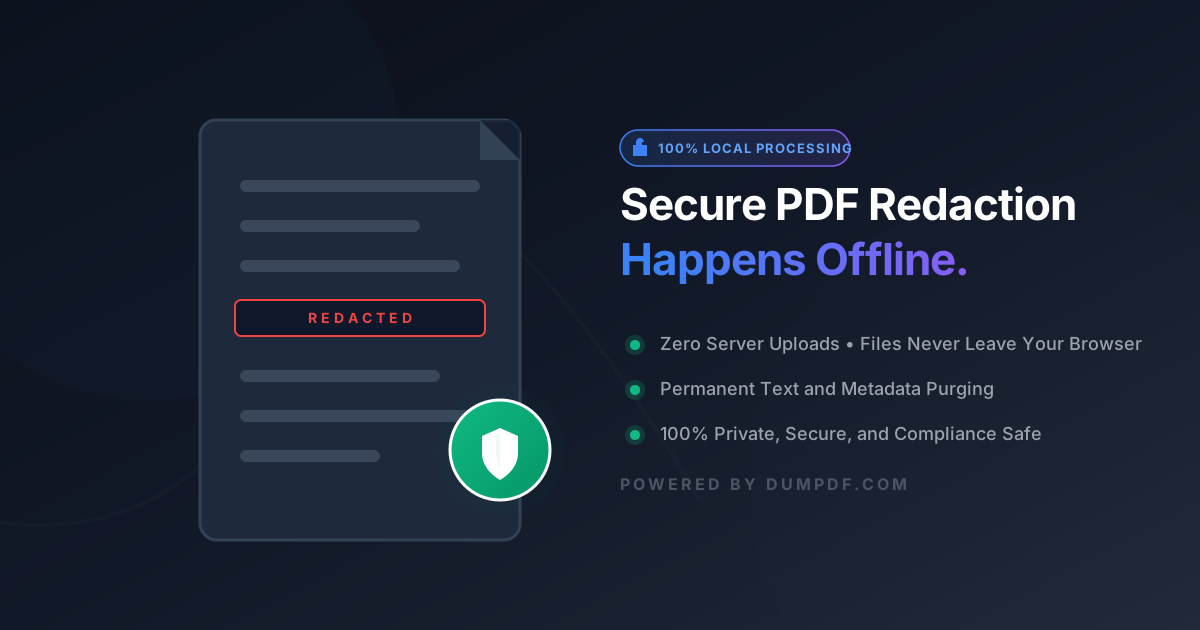
Quick Answer: Redacting sensitive information locally ensures that your private data never leaves your device, eliminating the risk of server-side data breaches. By using client-side tools like DumPDF, all document processing happens entirely in-browser for 100% offline privacy and zero data leaks.
In our increasingly digital world, the Portable Document Format (PDF) has become the global standard for sharing contracts, medical records, financial statements, and legal briefs. However, the convenience of sharing PDFs comes with a massive, often overlooked security vulnerability: the accidental exposure of sensitive information.
Whether you are a legal professional hiding client names, a business owner obscuring financial figures, or an individual masking your Social Security Number, redacting sensitive information is crucial. But how you redact this information matters just as much as the act of redaction itself.
Many users turn to free online PDF editors, unaware that uploading documents to cloud servers exposes them to severe privacy risks. In this comprehensive guide, we will explore why local, client-side PDF redaction is the only truly secure way to protect your private data.
The Illusion of Redaction: Drawing Boxes vs. True Redaction
Before diving into the mechanics of local processing, it is vital to understand what true redaction actually is. A common and highly dangerous mistake is simply drawing a black rectangle over sensitive text using a standard PDF viewer or annotation tool.
To the naked eye, the text appears hidden. However, underneath that visual black box, the original text characters still exist in the PDF’s underlying code. Anyone with basic computer skills can copy the “covered” area, paste it into a text editor, and instantly reveal the hidden information.
True redaction is a destructive process. It does not just cover the text; it completely removes the underlying metadata, text layers, and image pixels from the file structure, replacing them with a solid block of color. When you use a professional redact PDF tool, the sensitive data is permanently purged from the document, making recovery impossible.
The Hidden Dangers of Server-Side PDF Tools
When you search for “free PDF editor” or “redact PDF online,” you are met with dozens of cloud-based platforms. While convenient, these services pose significant security risks because of how they operate:
- The Upload Vulnerability: To process your file, these tools require you to upload your PDF to their remote servers. The moment your document leaves your local machine, you lose control over who can access it.
- Data Retention Policies: Many free cloud services store your uploaded files on their servers for hours, days, or even indefinitely. Their privacy policies may allow them to analyze your documents to train AI models or share aggregated data with third parties.
- Server Breaches and Hacks: Cloud servers are prime targets for cybercriminals. If a PDF utility provider suffers a data breach, your uploaded tax forms, medical records, or corporate secrets could end up on the dark web.
- Regulatory Non-Compliance: For industries governed by strict data privacy laws—such as HIPAA (healthcare), GDPR (Europe), or CCPA (California)—uploading personally identifiable information (PII) to an unverified third-party cloud server is a direct compliance violation that can result in massive fines.
The Solution: Client-Side, Local Processing
The safest way to handle sensitive documents is to ensure they never leave your computer. This is where client-side, local processing comes into play.
Modern web technologies, such as WebAssembly and advanced JavaScript, now allow developers to build powerful PDF manipulation tools that run entirely inside your web browser. When you use a local-first platform like DumPDF, your files are processed locally on your device’s CPU.
Why Local Processing is a Game-Changer:
- 100% Privacy: Because your files are never uploaded to a server, there is zero risk of interception, server breaches, or unauthorized data retention.
- Offline Capabilities: Since the processing engine runs in your browser, you can disconnect from the internet entirely and still perform complex PDF operations.
- Instant Performance: You do not have to wait for large files to upload to a remote server and download back to your machine. The processing happens instantly on your local hardware.
- Absolute Peace of Mind: You remain the sole custodian of your sensitive data throughout the entire editing process.
Step-by-Step: How to Safely Sanitize Your PDFs
To achieve maximum security when preparing documents for public sharing, follow this robust sanitization workflow:
1. Perform Local Redaction
Use a client-side tool to permanently strip out sensitive names, numbers, and addresses. Ensure the tool physically removes the text string from the document structure, rather than just overlaying a graphic.
2. Strip Hidden Metadata
PDFs contain hidden metadata, including the author’s name, creation date, editing history, and even GPS coordinates of where images were taken. Ensure your redaction process purges this metadata.
3. Secure the Final Document
Once you have fully sanitized your document, it is highly recommended to protect PDF files with strong password encryption. This adds an extra layer of defense, ensuring that only authorized recipients can open or modify the sanitized file.
Why DumPDF is the Ultimate Tool for Privacy-Conscious Users
DumPDF was built with a privacy-first philosophy. We believe that you shouldn’t have to compromise your personal data or corporate secrets just to edit a document.
Unlike traditional online PDF utilities that act as middlemen—forcing you to trust their servers with your most sensitive information—DumPDF executes all operations directly on your machine. Whether you are merging, splitting, compressing, or redacting, your files remain strictly yours. They never touch our servers, because we don’t even have servers to receive them. Your browser does 100% of the heavy lifting.
Conclusion
In an era where data breaches are a daily occurrence, protecting your digital footprint is no longer optional—it is a necessity. When it comes to redacting sensitive information from PDFs, relying on cloud-based servers is an unnecessary risk.
By shifting to local, client-side PDF tools, you retain complete control over your files, guarantee compliance with global privacy regulations, and ensure that your private information remains exactly where it belongs: on your local device.
Help Keep DumPDF 100% Free & Private
Zero server uploads • No accounts • No trackers