Securing M&A PDFs Locally: Ultimate Guide for Finance
Published on July 22, 2026
Quick Answer: Securing M&A PDFs locally requires client-side tools that process confidential financial files directly in your web browser without uploading data to external cloud servers. By executing redactions, encryption, and document edits completely offline, finance professionals eliminate server-side data leaks and comply with strict NDA and regulatory standards.
The High-Stakes World of M&A Document Security
In mergers and acquisitions (M&A), information is money—and silence is mandatory. Investment bankers, corporate development teams, private equity managers, and legal counsels routinely handle some of the most sensitive corporate data on the planet. From letter-of-intent (LOI) drafts, earnings before interest, taxes, depreciation, and amortization (EBITDA) adjustments, and capitalization tables to propriety IP audits and unannounced earnings reports, a single data leak can destroy deal value, breach strict non-disclosure agreements (NDAs), and spark severe regulatory penalties.
Despite these immense risks, many deal teams still rely on standard cloud-based online PDF tools to manipulate, merge, split, and edit confidential deal documents. What many finance professionals fail to realize is that uploading a sensitive prospectus or audit file to a traditional “free online PDF converter” exposes corporate assets to external servers, cloud storage retention policies, potential man-in-the-middle (MitM) attacks, and unauthorized third-party access.
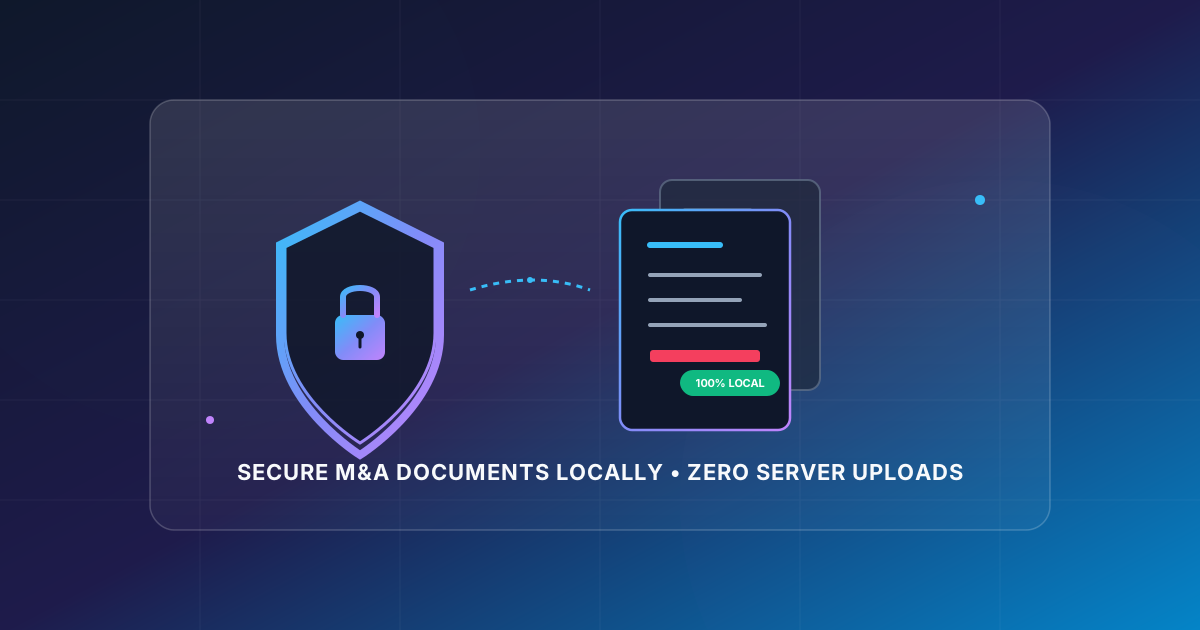
To maintain uncompromising data integrity, modern finance teams are pivoting toward zero-server, client-side PDF processing tools like DumPDF, which execute 100% of tasks directly inside the user’s browser.
Why Cloud-Based PDF Tools Are a Liability in M&A
When you upload a PDF file to a conventional online PDF website, your file travels across the public internet to a remote cloud server. Even if the platform claims to delete your files after an hour, the process inherently introduces critical security liabilities:
- Transient Server Storage Risks: Data left on remote servers—even temporarily—can be indexed, cached, or harvested by unauthorized background scripts or compromised server infrastructure.
- Regulatory & Compliance Violations: Financial regulatory bodies (such as the SEC, FINRA, GDPR, and CCPA) mandate strict controls on data sovereignty and storage. Uploading unencrypted target company financials to unknown cloud servers can violate compliance frameworks.
- Data Loss via Third-Party Intermediaries: Third-party cloud infrastructure providers hosting free online PDF services may retain backup snapshots or transmit analytical telemetry, creating audit log nightmares for risk management teams.
- Metadata and Shadow IT Exposure: Unmonitored employees using arbitrary online utilities introduce “Shadow IT,” making it impossible for Chief Information Security Officers (CISOs) to track where corporate deal materials reside.
The Local Solution: 100% Client-Side WebAssembly Processing
The modern browser is no longer just a document viewer—it is a sandboxed, high-performance computing environment. Through cutting-edge WebAssembly (Wasm) and local JavaScript engines, platforms like DumPDF process complex PDF file modifications entirely within your local device’s memory (RAM).
How Zero-Server Architecture Works
When you open a local PDF tool:
- Zero Network Traffic: The PDF file stays on your hard drive. It is never transmitted across an internet protocol (IP) socket.
- Instant Processing: Because processing relies on your local CPU rather than remote server queues, operations finish almost instantaneously.
- True Offline Capability: You can load the application webpage, disconnect your Wi-Fi or Ethernet cable completely, and perform all your PDF operations offline without interruption.
Essential Workflows for Securing M&A Documents Locally
During due diligence and deal closing phases, finance specialists perform several recurring operations on PDF documents. Here is how to handle these critical tasks locally without compromising confidentiality.
1. Permanently Redacting Sensitive Financial Data
During early-stage deal rooms, buyers must review operations without seeing trade secrets, personally identifiable information (PII) of key executives, or specific vendor pricing terms. Simply drawing a black rectangle over text using basic software does not remove the underlying text layer.
To prevent leaks, finance teams must redact sensitive PDF documents using true local redaction tools. Local redaction completely strips out the underlying vectors and text characters from the PDF memory buffer, rendering recovery impossible while ensuring no unredacted version touches an external server.
2. Password Encryption and Access Control
Before distributing preliminary deal memos to potential buyers, you must apply military-grade encryption. When you protect your PDFs with passwords, the encryption algorithm runs directly inside your local web browser. This ensures that your private password key and unencrypted source files never pass through a third-party relay.
3. Reviewing Heavy Deal Books on the Go
M&A executives often need to digest hundreds of pages of regulatory filings or financial audits while traveling between client meetings or during long flights. For hands-free auditing without risking visual shoulder surfing in airport lounges, consider converting financial documents to speech offline. This allows dealmakers to listen to complex prospectuses privately through headphones without uploading audio data or text scripts to cloud AI vendors.
Step-by-Step Security Protocol for M&A Deal Teams
To establish a zero-trust PDF workflow across your financial advisory or corporate development desk, follow this best-practice protocol:
| Stage | Security Action | Local Tool Requirement |
|---|---|---|
| 1. Preparation | Strip EXIF metadata, hidden author notes, and revision histories. | Local PDF Metadata Sanitizer |
| 2. Sanitize Data | Burn in blackouts on PII, social security numbers, and client names. | In-Browser Local Redaction |
| 3. Assembly | Combine disparate balance sheets, audit letters, and cap tables into one master binder. | Client-Side PDF Merger |
| 4. Protection | Apply AES-256 encryption with a strong passphrase. | Browser-Native Password Protector |
| 5. Verification | Test offline execution by running the process in Airplane Mode. | DumPDF Offline Processing |
Conclusion: Elevate Your Deal Room Security with DumPDF
In M&A and corporate finance, maintaining control over confidential data is essential to protecting firm reputation and shareholder value. Cloud-based PDF conversion services introduce unacceptable risks that can be easily avoided.
By leveraging DumPDF, finance professionals gain access to a complete suite of browser-native, client-side PDF utilities. Enjoy lightning-fast merging, splitting, watermarking, encryption, and redaction with absolute peace of mind—knowing your financial files never leave your computer.
Help Keep DumPDF 100% Free & Private
Zero server uploads • No accounts • No trackers