Secure PDF Review for Judges: 100% Offline Legal File Safety
Published on August 13, 2026
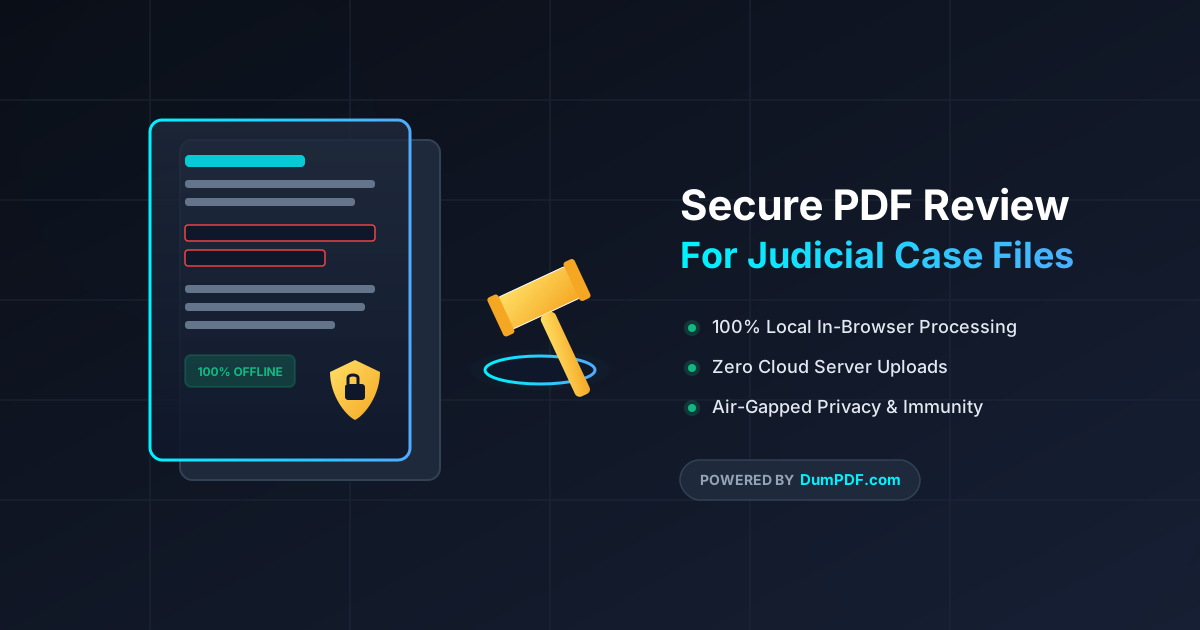
Quick Answer: Judges can securely review and manipulate confidential case files by utilizing client-side, offline PDF tools that process files entirely inside the local web browser. By preventing server uploads altogether, these tools guarantee absolute confidentiality, immunity to cloud data breaches, and full compliance with judicial secrecy mandates.
The modern judicial system relies heavily on digital documentation. From sealed wiretap applications and trade secret filings to sensitive family court records and grand jury indictments, judges handle some of the most sensitive information in society.
However, managing digital files presents a major cyber security challenge. Traditional web-based PDF converters require users to upload documents to external cloud servers. For a judge or legal clerk working on an active case, uploading a confidential court record to a third-party server represents an unacceptable breach of protocol—and potentially a violation of federal, state, or international privacy laws.
Fortunately, modern browser technology offers a superior alternative: 100% client-side, offline PDF tools. By running software directly in the local browser memory, judicial chambers can manipulate, inspect, and organize confidential case files with zero risk of server-side data leaks.
The Hidden Vulnerabilities of Standard Online PDF Editors
When a user drags a file into a typical online PDF converter, a complex cloud workflow begins behind the scenes:
- Remote Upload: The file is transmitted over the internet to a remote web server.
- Server-Side Processing: The file resides in temporary or persistent cloud storage while third-party scripts modify it.
- Download & Retention: The processed file is sent back to the browser, while cached copies often linger on the server for hours or days for logging purposes.
For average consumer tasks, this workflow is generally adequate. For the judiciary, however, it introduces severe operational and legal risks:
- Third-Party Data Interception: Cloud servers can be targeted by advanced persistent threats (APTs), subpoenaed, or compromised via misconfigured storage buckets.
- Compliance Violations: Jurisdictions across the globe mandate strict data sovereignty rules (e.g., CJIS, HIPAA, GDPR). Sending sensitive personal identifiers across commercial cloud channels violates these standards.
- Unwanted Logging: Server logs may record document metadata, filename details, or full text contents, creating a permanent audit trail outside judicial control.
How Offline, Client-Side PDF Technology Works
To solve these security risks, privacy-first engineering platforms like DumPDF utilize modern web engines powered by WebAssembly and client-side JavaScript.
[ Local PDF File on Computer ]
               │
               ▼
   [ Browser WebAssembly Engine ]  <─── Processed entirely in RAM
               │                        No network packets sent
               ▼
[ Modified PDF Saved to Disk ]
When you open an offline PDF tool, the application code loads once into your web browser. Once loaded, the engine executes directly on your computer’s CPU and system memory.
Core Technological Advantages for Chambers
- Zero Server Uploads: Your PDF file never leaves your workstation or laptop.
- True Air-Gap Support: Once the web application page is opened, you can completely disconnect your device from Wi-Fi or local ethernet, and the PDF tool will continue to function perfectly offline.
- Instantaneous Performance: Because files are not throttled by upload or download speeds, large multi-gigabyte evidence bundles process almost instantly.
Key Workflows for Judicial Review
Judges and judicial clerks must perform specific tasks on case files while maintaining absolute privacy. Here is how offline tools streamline these core legal workflows.
1. Permanent Redaction of Identifiers and Sealed Text
Court filings frequently contain personal identifying information (PII) such as Social Security numbers, financial account details, or names of minors. Simply drawing a black rectangle over text using basic markup tools does not remove the underlying text layer—tech-savvy individuals can easily copy and paste text behind standard black overlays.
Judges must use tools that fully purge the underlying binary streams. Using client-side technology, you can redact sensitive text directly inside the browser environment, ensuring redacted data is permanently destroyed before files are released into public dockets.
2. Encrypting Confidential Chambers Drafts
Interlocutory orders, draft opinions, and internal clerk communications must remain strictly confidential until officially rendered. Before circulating sensitive opinions among panel judges or magistrate teams, chambers staff can encrypt case files with strong passwords without risking cloud key-logging or remote decryption attacks.
3. Assembling and Reordering Evidentiary Bundles
During complex litigation, court officers must often combine hundreds of exhibits into single, searchable master volumes or extract specific sealed exhibits into separate files. Client-side tools handle multi-page splitting, merging, page reordering, and rotation smoothly in memory without exposing sensitive evidentiary exhibits to remote networks.
Institutional Precedents: Protecting Non-Public Information
The need for zero-leak document processing extends beyond courtroom walls into other highly regulated sectors that handle sensitive non-public data.
For instance, major financial institutions face similar challenges when evaluating sensitive corporate intelligence and market-moving announcements. You can explore how financial rating agencies maintain strict air-gapped protocols in our article on protect high-stakes market research.
Just as financial analysts must protect unannounced earnings reports from remote cloud capture, judges must safeguard draft rulings and grand jury testimony with identical zero-upload precautions.
Best Practices for Reviewing Case Files Securely
To implement an uncompromised, zero-leak workflow in judicial chambers, follow this step-by-step security protocol:
Step 1: Open Client-Side PDF Tool in Web Browser
                      │
Step 2: Turn Off Wi-Fi / Enable Airplane Mode (Air-Gap)
                      │
Step 3: Load, Inspect, Redact, or Split Confidential PDF
                      │
Step 4: Save Modified File Directly to Encrypted Local Drive- Verify Client-Side Processing: Ensure your software explicitly processes files inside the browser engine rather than transferring them to a remote endpoint.
- Utilize Local Storage Encryption: Always save processed files onto local disks encrypted with hardware-level security (e.g., BitLocker or FileVault).
- Audit Redacted Copies: Before releasing public orders, double-check that text layers have been flattened and stripped of metadata, hidden layers, or underlying vector paths.
- Enforce Air-Gapped Workstations: For ultra-sensitive criminal warrants or national security matters, load your client-side PDF tool, disconnect network interfaces entirely, perform all file modifications, and re-engage network connectivity only after closing browser sessions.
Conclusion
Judicial integrity depends on maintaining absolute control over confidential records. Relying on cloud-based document utilities introduces unnecessary risks of unauthorized disclosure, vendor sub-processors, and cyber attacks.
By adopting 100% offline, browser-based PDF processing tools like DumPDF, judges, magistrates, and legal clerks can manipulate, redact, and organize sensitive court filings with absolute confidence. Processing documents locally inside browser memory delivers 100% privacy, zero data leaks, and complete compliance with the highest standards of legal ethics.
Help Keep DumPDF 100% Free & Private
Zero server uploads • No accounts • No trackers