Secure M&A PDFs Locally: The Ultimate Finance Guide
Published on May 29, 2026
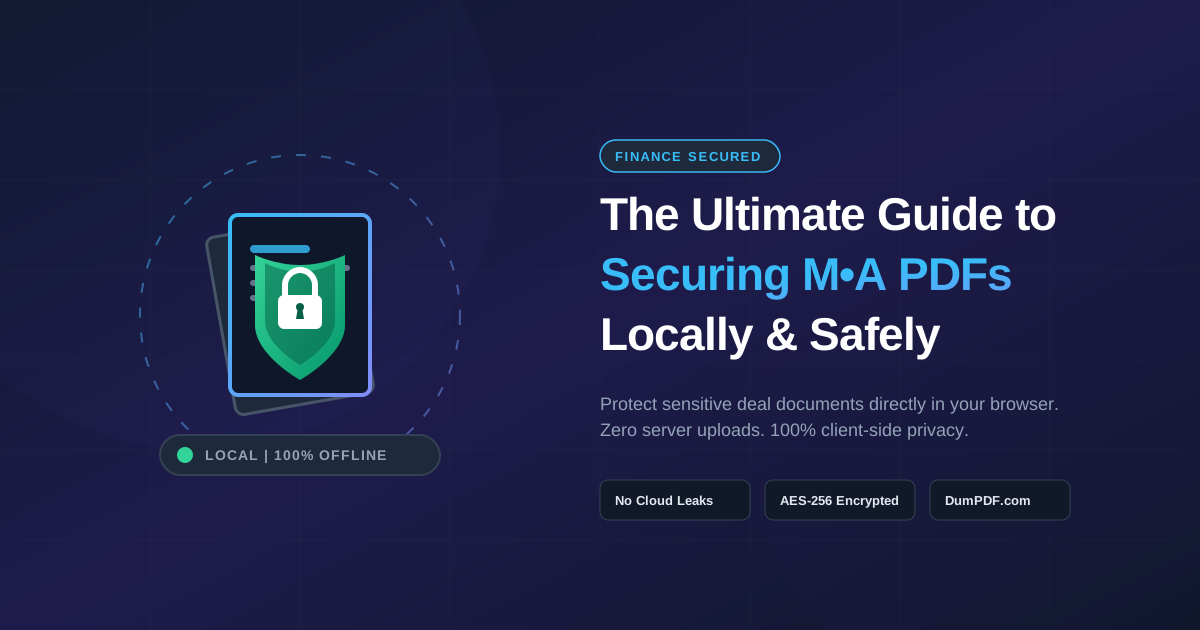
Quick Answer: Finance professionals can prevent devastating data leaks during M&A deals by processing and securing PDFs locally. Using client-side, in-browser tools guarantees that sensitive financial documents never leave your device or upload to external servers.
In the high-stakes world of Mergers and Acquisitions (M&A), information is the most valuable currency. A single leaked balance sheet, an unredacted valuation model, or an exposed letter of intent can derail a multi-million-dollar transaction overnight.
For finance professionals, investment bankers, and corporate development teams, managing PDF documents securely is not just a best practice—it is a regulatory and fiduciary necessity. Yet, many professionals unknowingly expose their most sensitive data by using conventional online PDF converters that upload files to remote servers.
This comprehensive guide explores why local, client-side PDF processing is the gold standard for M&A document security, and how you can safeguard your financial workflows without compromising on speed or convenience.
The Hidden Vulnerabilities of M&A Document Workflows
During an M&A transaction, hundreds of PDF documents pass through multiple hands: due diligence checklists, tax returns, payroll records, and intellectual property filings. To prepare these files, deal teams frequently need to merge, split, compress, or redact pages.
Historically, finance professionals have turned to quick online PDF utilities to perform these tasks. However, this convenience comes with massive, often invisible risks:
1. The Server-Side Upload Risk
Most free online PDF tools require you to upload your document to their cloud servers. Once your file is uploaded, you lose visibility and control over where that data is stored, how long it is cached, who has access to the server, and whether it is being used to train machine learning models.
2. Regulatory Compliance Violations
Uploading non-public financial information (NPFI) or personally identifiable information (PII) to unauthorized third-party servers violates strict compliance frameworks such as GDPR, CCPA, HIPAA, and SEC regulations. The penalties for these violations can be financially devastating and ruin institutional trust.
3. Metadata and Hidden Layer Leaks
Simply drawing a black box over sensitive text in a standard PDF editor does not actually remove the data. The underlying text remains in the PDF metadata or structural layers, making it incredibly easy for unauthorized parties to extract.
The Paradigm Shift: Client-Side, Offline PDF Processing
To eliminate these risks, modern finance teams are shifting toward client-side, offline-first PDF tools.
What is Client-Side Processing?
Unlike traditional web tools that process your files on a remote server, client-side tools use advanced web technologies (like WebAssembly and JavaScript) to execute all computations directly within your local web browser sandbox.
When you use a client-side tool:
- 0% Server Uploads: Your files never leave your computer.
- 100% Offline Capability: You can disconnect your internet entirely, and the tool will still function perfectly.
- Zero Data Footprint: Because there is no server involved, there is no database where your sensitive M&A documents can be leaked, hacked, or subpoenaed.
Step-by-Step: How to Secure Your M&A PDFs Locally
To ensure your deal pipeline remains completely secure, follow this local processing workflow when preparing sensitive financial documents.
Step 1: Permanently Redact Sensitive Data
Before sharing due diligence documents with potential buyers, you must remove trade secrets, customer lists, and individual salaries.
Do not rely on simple markup tools. Instead, use a secure utility to redact PDF files locally. This process physically strips the targeted text and images from the document’s code, ensuring that the redacted information can never be recovered or extracted from the metadata.
Step 2: Apply Strong Local Encryption
Unencrypted PDFs sent via email are highly vulnerable to interception. You should always encrypt your files before distribution.
Use a local encryption tool to protect PDF files with strong AES-256 password encryption. Because the encryption process happens entirely in your local browser, your password is never transmitted across the internet, protecting it from brute-force server attacks.
Step 3: Clean Metadata and Audit Document Layers
M&A PDFs often contain hidden revision histories, author names, and comments. Before finalizing your documents, ensure your local PDF tool strips out all unnecessary metadata. This guarantees that competitors cannot reverse-engineer your negotiation strategies or identify external advisors from the file properties.
Why DumPDF is the Trusted Choice for Secure M&A Workflows
DumPDF is designed specifically for professionals who require absolute privacy and enterprise-grade security without the friction of heavy software installations.
- Absolute Privacy by Design: DumPDF is a 100% client-side platform. When you merge, split, compress, or protect your files, every operation occurs on your local CPU.
- No Software to Install: Many corporate IT departments block the installation of third-party desktop applications. DumPDF runs directly in any modern web browser, giving you the security of a local desktop app with the convenience of a web tool.
- Blazing Fast Performance: By leveraging your local hardware, DumPDF processes large due diligence bundles instantly, bypassing the upload and download bottlenecks associated with server-based tools.
Best Practices for Maintaining M&A Document Integrity
Beyond using local PDF tools, incorporate these security habits into your daily M&A operations:
- Establish a Clean Desk & Screen Policy: Ensure sensitive financial models are not visible to unauthorized personnel or external visitors.
- Use Unique, High-Entropy Passwords: When protecting PDFs, avoid simple passwords. Use a mix of uppercase letters, lowercase letters, numbers, and symbols.
- Audit Your PDF Tools Regularly: Ensure your team is not using unauthorized “free” online converters that store files in cloud caches. Standardize on verified local-processing platforms like DumPDF.
By taking control of your PDF processing and keeping your data strictly local, you protect your clients, your transactions, and your professional reputation from the growing threat of digital data leaks.
Help Keep DumPDF 100% Free & Private
Zero server uploads • No accounts • No trackers