How Judges Can Securely Review Case Files Offline
Published on July 16, 2026
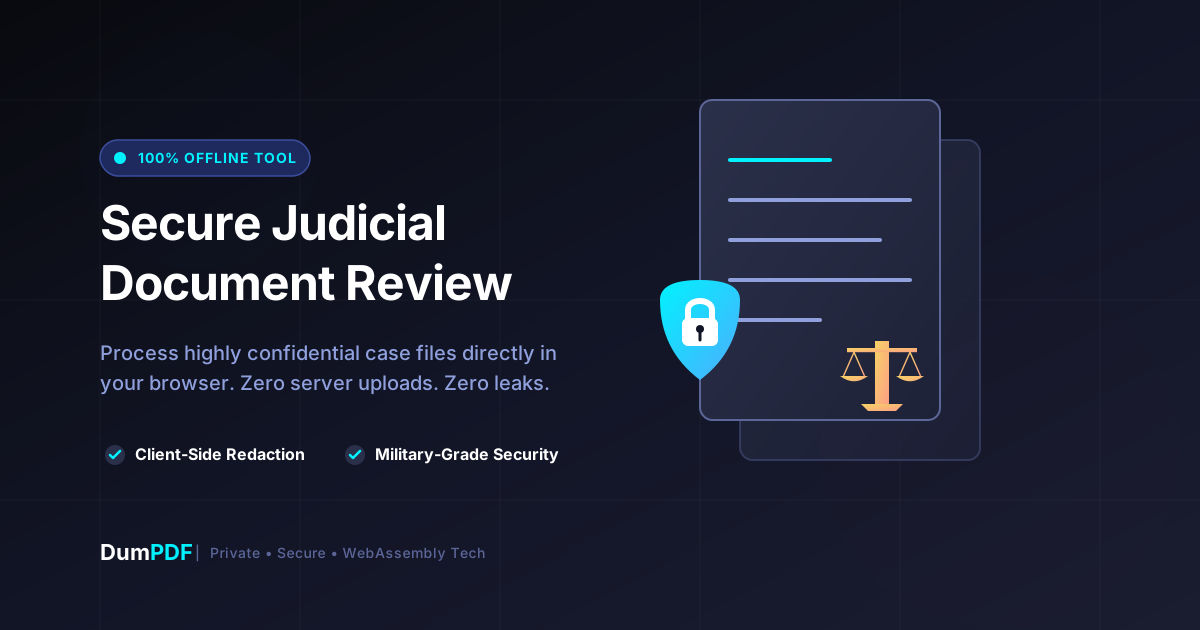
Quick Answer: Judges can securely review confidential case files by using client-side, offline PDF tools that process documents directly in the browser. This eliminates data leakage risks by ensuring sensitive legal files are never uploaded to external servers.
In the judicial system, confidentiality is not just a preference—it is a strict legal and ethical mandate. From sealed indictments and trade secrets to witness protection details and sensitive personal data, the documents that cross a judge’s desk contain information that could ruin lives or derail the course of justice if leaked.
As courts transition to fully digital workflows, judges and legal clerks must constantly interact with PDF files. However, the convenience of digital document manipulation often comes with a hidden, dangerous trade-off: data privacy. Many legal professionals unknowingly compromise highly confidential case files by using standard online PDF utilities.
This guide explores the security vulnerabilities of cloud-based PDF processors and explains how judges can leverage client-side, offline PDF tools to maintain absolute confidentiality.
The High-Stakes Security Needs of the Judiciary
Every day, judges handle documents that are protected by strict privacy frameworks, including CJIS (Criminal Justice Information Services), HIPAA, and GDPR. A single leak of a sealed document can lead to mistrials, compromise ongoing investigations, or result in severe civil liabilities.
When a judge reviews a case file, they are not just reading text; they are managing a goldmine of metadata, hidden layers, and highly sensitive records. Common tasks include:
- Redacting personally identifiable information (PII) before publishing opinions.
- Combining multiple evidence submissions into a single master file.
- Splitting massive discovery packets into manageable sub-documents.
- Applying password security to restrict unauthorized access by court staff or external counsel.
To perform these tasks, many legal professionals turn to search engines, typing in queries like “how to split a PDF” or “how to redact text.” Unfortunately, the top results are almost always cloud-based SaaS platforms.
Why Traditional Cloud-Based PDF Tools Are a Legal Liability
Most popular online PDF tools operate on a server-side model. When you upload a document to merge, split, or redact it, the file is sent over the internet to a third-party server. The server processes the file, saves a copy (often temporarily, but sometimes indefinitely under vague terms of service), and sends the output back to your browser.
For a judge or legal clerk, this process introduces unacceptable risks:
- Data in Transit Vulnerabilities: Even with HTTPS encryption, intercepting files in transit is a constant target for sophisticated cybercriminals.
- Server-Side Breaches: If the third-party PDF service experiences a database breach, your uploaded, confidential case files could be exposed on the dark web.
- Lack of Compliance: Uploading government or court documents to unvetted, commercial third-party servers directly violates federal and state data protection laws.
- Incomplete Redaction: Many server-side tools merely place a black box over the text without actually stripping the underlying data.
To eliminate these risks, the legal sector must adopt client-side, offline-first technology.
The Client-Side Advantage: 100% Privacy
Client-side processing means that all PDF manipulations happen directly inside your web browser, utilizing your computer’s local processor.
Using advanced web technologies like WebAssembly (Wasm), modern tools like DumPDF allow you to perform heavy-duty PDF editing without sending a single byte of data to an external server. Your files never leave your local machine. You can even disconnect your computer from the internet entirely, and the tools will continue to work flawlessly. This guarantees 100% privacy and zero risk of server-side data leaks.
Essential PDF Workflows for Judges (and How to Do Them Securely)
Judges can maintain a seamless, highly secure workflow by utilizing specialized, offline-first PDF utilities. Here is how to handle common judicial document tasks safely.
1. Redacting Sensitive Information
Before court documents are made public, clerk offices must strip out social security numbers, home addresses, and minor names. Doing this incorrectly can be disastrous.
Using offline tools ensures that the actual text layer is permanently destroyed and overwritten. When you redact sensitive data locally, you guarantee that no cached copies of the unredacted documents remain on external servers, protecting both the court and the individuals involved from accidental exposure.
2. Organizing and Structuring Court Bundles
During a trial, judges are inundated with hundreds of separate PDF files containing evidence, motions, and briefs. To review these efficiently, judges often need to consolidate them.
Using a secure browser-based tool, you can merge PDF files of different evidentiary submissions into a single, cohesive file. Because the merging happens locally in your browser, you can organize highly sensitive corporate secrets or medical records without worrying about third-party eyes.
3. Securing Documents Before Distribution
Once a judge signs an order or a clerk finalizes a confidential memo, it must be protected against unauthorized edits or viewing.
Before sharing files across the court network, judges can protect PDF documents by applying strong AES-256 bit encryption and custom permissions. This prevents unauthorized users from printing, copying text, or editing the document, ensuring the integrity of the judicial record.
Best Practices for Judicial Document Hygiene
To ensure the highest level of security when reviewing and editing files, legal professionals should implement these simple habits:
- Work Offline: When handling ultra-sensitive case files, load your offline-first PDF tool in your browser, turn off your Wi-Fi, perform the necessary edits, and save the file before reconnecting.
- Clear Browser Cache: Regularly clear your browser’s local cache to ensure no temporary file states remain stored in the browser application memory.
- Avoid Email Attachments: Instead of emailing sensitive PDFs to clerks, use secure, encrypted local network drives or air-gapped USB drives.
- Verify the URL: Always ensure you are using a trusted, secure platform like DumPDF that explicitly states its commitment to zero-server uploads.
Conclusion
For judges, safeguarding the integrity of case files is a fundamental duty. Relying on traditional, cloud-based PDF tools introduces unnecessary and potentially illegal security risks. By transitioning to client-side, offline PDF tools like DumPDF, judges and legal professionals can edit, merge, redact, and protect their documents with absolute peace of mind—knowing their data never leaves their device.
Help Keep DumPDF 100% Free & Private
Zero server uploads • No accounts • No trackers