Why You Need an Offline-First Document Policy
Published on April 2, 2026
In an increasingly interconnected digital world, data breaches are no longer a distant threat but a stark reality for businesses of all sizes. From sensitive client information to proprietary company data, the documents your organization handles daily are invaluable assets – and prime targets for cybercriminals. While cloud solutions offer convenience, they often come with inherent risks that many companies overlook. This is precisely why your company needs to adopt a strict offline-first document policy, leveraging client-side PDF manipulation tools like DumPDF, to ensure uncompromised security and privacy.
The Rising Stakes: Data Breaches and Cloud Vulnerabilities
Every day, headlines scream about another major data breach, exposing millions of records and costing companies astronomical sums in damages, legal fees, and reputational harm. A significant portion of these incidents can be traced back to vulnerabilities in cloud storage, third-party service providers, or data in transit.
When you upload a document to an online PDF tool, you are, by definition, sending your data to a third-party server. This creates multiple points of vulnerability:
- Data in Transit: Your file travels across the internet, potentially exposed to interception.
- Third-Party Storage: The service provider temporarily stores your file, opening it up to their server vulnerabilities, insider threats, or misconfigurations.
- Data Processing: Even during processing, your file resides on someone else’s infrastructure.
For businesses dealing with sensitive information – financial records, healthcare data, legal documents, intellectual property – these risks are simply unacceptable.
What Exactly is an Offline-First Document Policy?
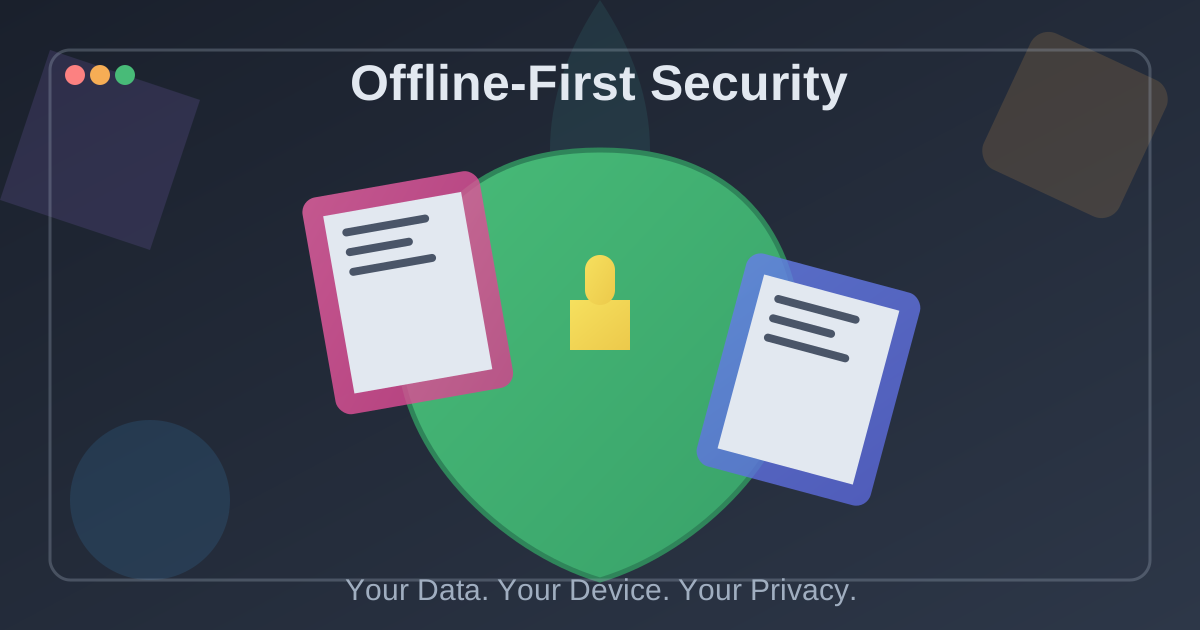
An offline-first document policy dictates that, wherever possible, document processing and manipulation should occur locally on the user’s device, without uploading files to external servers or cloud services. This approach prioritizes security and privacy by ensuring that sensitive data never leaves your controlled environment.
Crucially, this doesn’t mean reverting to outdated desktop software that requires constant updates and licensing headaches. Modern client-side web applications, like DumPDF, bring the power of offline processing directly to your browser. This means:
- No Server Uploads: Your files are never sent over the internet to a third-party server.
- In-Browser Processing: All operations – from merging and splitting to compression and redaction – happen purely within your web browser, on your local machine.
- Zero Data Retention: Once you close the browser tab, no trace of your document remains anywhere other than on your own device.
This paradigm shift offers a level of security and control that traditional online tools simply cannot match.
Why an Offline-First Policy is Crucial for Your Company
Adopting a strict offline-first document policy isn’t just a good idea; it’s a strategic imperative for any company serious about data security, privacy, and compliance.
1. Unparalleled Data Security and Privacy
This is the cornerstone of the offline-first approach. When files never leave your browser, the risk of data breaches from external servers is completely eliminated. There’s no data in transit to intercept, no third-party server to compromise, and no residual data stored by a service provider. This provides a fortress-like defense for your most sensitive documents.
Imagine needing to protect PDF documents containing confidential client agreements or employee records. With an offline-first tool, you can add passwords and encryption directly on your device, confident that the unencrypted version never touched an external server. This peace of mind is invaluable.
2. Mitigating Cloud-Related Risks
While cloud services offer undeniable benefits, they are not without their perils. Supply chain attacks, where attackers compromise a service provider to gain access to their clients’ data, are increasingly common. Misconfigurations by cloud administrators, or even malicious insiders at a cloud company, can expose vast amounts of data. An offline-first policy bypasses these systemic risks by keeping your data out of the cloud ecosystem during processing.
3. Ensuring Business Continuity and Reliability
What happens when your internet connection drops, or a cloud service experiences an outage? With traditional online tools, your workflow grinds to a halt. An offline-first approach, leveraging in-browser processing, means that as long as you have the tool loaded, you can continue working on your documents without interruption. This ensures greater business continuity, especially for critical tasks.
4. Simplified Compliance and Regulatory Adherence
Navigating the complex landscape of data privacy regulations – such as GDPR, HIPAA, CCPA, and countless others – is a major challenge for businesses. Many regulations impose strict requirements on data residency, cross-border data transfers, and the handling of personally identifiable information (PII). By keeping document processing strictly client-side, you significantly simplify compliance efforts. You retain full control over where your data resides and how it’s handled, eliminating concerns about third-party data storage locations or unknown processing procedures. When you need to redact PDF documents to remove sensitive information before sharing, an offline tool ensures that the unredacted version remains private and secure on your device.
5. Empowering User Trust and Confidence
Both internal and external stakeholders benefit from an offline-first policy. Employees can work with sensitive documents knowing their data is secure and private, fostering a culture of trust and responsibility. Clients and partners will also appreciate your proactive stance on data security, enhancing your company’s reputation and demonstrating your commitment to protecting their information.
The DumPDF Advantage: True Client-Side Processing
DumPDF stands at the forefront of this offline-first revolution. Our suite of PDF tools operates entirely within your web browser, leveraging powerful client-side technologies. This means your files are NEVER uploaded to our servers, nor do they ever leave your device. All processing happens purely on your machine, ensuring 100% privacy and zero data leaks.
Whether you need to:
- Merge PDF documents into a single report without sending them to the cloud.
- Compress PDF files to reduce their size for easier sharing, all locally.
- Split PDF documents into individual pages or extract specific sections.
- Or perform any other critical PDF manipulation, DumPDF offers a secure, reliable, and private solution.
With DumPDF, you get the convenience of a web-based tool combined with the unparalleled security of desktop software. It’s the ideal choice for companies looking to implement a robust offline-first document policy without sacrificing usability or functionality.
Implementing an Offline-First Policy in Your Company
Adopting an offline-first policy involves more than just choosing the right tools. It requires a holistic approach:
- Educate Your Team: Ensure all employees understand the risks of online document processing and the benefits of an offline-first approach.
- Establish Clear Guidelines: Define which types of documents must be handled offline and outline the approved tools and procedures.
- Invest in the Right Tools: Select client-side solutions like DumPDF that explicitly state “no server uploads” and prioritize user privacy.
- Regular Audits: Periodically review your document handling processes to ensure compliance with your offline-first policy.
By integrating these steps, your company can build a resilient defense against the ever-evolving landscape of cyber threats.
Conclusion
In an era where data is king and privacy is paramount, an offline-first document policy is no longer a luxury but a necessity. By choosing client-side processing tools like DumPDF, your company can achieve unparalleled data security, streamline compliance efforts, and foster a culture of trust and responsibility, all while maintaining efficiency and productivity. Take control of your data; embrace the offline-first future today.
Help Keep DumPDF 100% Free & Private
Zero server uploads • No accounts • No trackers