Never Upload Confidential PDFs to Online Splitters
Published on April 19, 2026
In an increasingly digital world, the convenience of online tools is undeniable. Need to quickly convert a file, edit a document, or perhaps just split your PDF into multiple smaller ones? A quick search brings up countless free online PDF splitters, promising instant results with a few clicks. While these tools might seem harmless for non-sensitive documents, a critical question often goes unasked: What truly happens to your confidential data when you upload it to a third-party server?
For everyday users and professionals handling sensitive information – from financial statements and medical records to legal documents and proprietary business plans – the answer can be alarming. Uploading confidential PDFs to online splitters introduces a host of risks that far outweigh the convenience.
This post will delve into the top 5 compelling reasons why you should never compromise your privacy and security by uploading confidential PDFs to online splitters, and how secure, client-side solutions like DumPDF offer a robust alternative.
1. Data Privacy Violations and Unintended Data Retention
When you upload a PDF to an online splitter, that file leaves your device and travels to a server owned and operated by a third party. While many services claim to delete your files after a short period, the reality of data retention policies can be murky and inconsistent.
- Temporary Storage Isn’t Always Temporary: Even if a service promises to delete files within minutes or hours, those files still reside on their servers during that time. This window, however brief, is enough for unauthorized access or logging.
- Server Logs and Backups: Servers routinely create logs and backups. Your “deleted” file might still exist in a backup archive for much longer than you anticipate, making it vulnerable to future breaches.
- Unclear Ownership and Usage Rights: Buried deep within the terms of service (which most users don’t read) might be clauses that grant the service providers certain rights to your uploaded data, or allow them to use anonymized data for “improvement” – a slippery slope when dealing with confidential information.
Imagine uploading a contract with proprietary information or a personal tax document. Even a temporary stay on a third-party server poses a significant risk of your private data being inadvertently exposed or retained beyond your control.
2. Vulnerability to Cyberattacks and Data Breaches
The internet is a constant battlefield against cyber threats. No server, regardless of its size or sophistication, is entirely immune to attacks. Free online PDF tools, especially those run by smaller entities, often lack the robust security infrastructure of larger, enterprise-grade services.
- Target for Attackers: Servers that handle large volumes of user data, even if temporarily, are attractive targets for hackers looking to steal personal information, intellectual property, or financial data.
- Weak Security Protocols: Smaller operations might cut corners on security, using outdated software, weak encryption, or insufficient firewall protection, making them easier targets for data breaches.
- Insider Threats: While less common, the risk of malicious insiders within a service provider’s organization cannot be entirely discounted. An employee with ill intent could potentially access or misuse uploaded confidential files.
A data breach on an online splitter could expose your sensitive PDFs, leading to identity theft, corporate espionage, or severe personal and professional repercussions. The “free” convenience could come at an extremely high cost to your security.
3. Compliance and Regulatory Nightmares
For professionals, businesses, and organizations, uploading confidential PDFs to an unknown online service isn’t just a privacy risk; it’s a potential legal and regulatory nightmare. Strict data protection laws like GDPR (Europe), HIPAA (healthcare in the US), CCPA (California), and others mandate how sensitive personal and corporate data must be handled.
- Violation of Data Protection Laws: These regulations often require explicit consent for data processing, clear data handling policies, and strict controls over where and how data is stored. Uploading data to a third-party server without proper due diligence or a Data Processing Agreement (DPA) can easily violate these laws.
- Heavy Fines and Penalties: Non-compliance can result in exorbitant fines, legal action, and severe damage to a company’s reputation. For instance, a HIPAA violation involving patient records through an unsecured online tool could lead to millions in penalties.
- Loss of Client Trust: For businesses, a data leak resulting from using an insecure online tool can erode client trust, lead to loss of business, and make it difficult to recover credibility.
Even if the online splitter claims to be “GDPR compliant,” the burden of ensuring compliance ultimately falls on the entity uploading the data. Relying on vague assurances for confidential business or client data is a gamble no professional should take.
4. Lack of Transparency and Shady Terms of Service
Many free online tools operate with a business model that isn’t immediately obvious. If you’re not paying for a service, you might be paying with your data. The terms of service (ToS) are often dense, legally complex documents that most users skip.
- Hidden Data Usage Policies: Within these ToS, some services might reserve the right to collect, analyze, or even share your “anonymized” data with third parties for advertising, analytics, or other purposes. While your specific document might not be directly shared, the metadata or extracted information could be.
- Jurisdictional Issues: The servers of online tools can be located anywhere in the world, subject to different legal frameworks regarding data privacy. Your data might be processed in a country with weaker data protection laws than your own, offering little recourse if a breach occurs.
- Changes to ToS Without Notice: Terms of service can change, and users are rarely notified effectively. What was once a relatively benign policy could evolve into something more intrusive without your explicit awareness.
True transparency about data handling is rare among free online services. The lack of clear, user-friendly information about what happens to your uploaded files should be a significant red flag for any confidential document.
5. Risk of Malicious Code and File Tampering
While less common for simple PDF splitters than for converters or editors, there’s always a latent risk of malicious code or file tampering when using an unknown online service.
- Compromised Tools: An online tool itself could be compromised by hackers, allowing them to inject malware into the processed files you download. You might download your “split” PDF, unknowingly bringing a virus or spyware onto your device.
- Hidden Content Modification: Though rare, a malicious service could subtly alter the content of your PDF, adding hidden links, tracking pixels, or even modifying text in ways that are hard to detect, potentially compromising the integrity of legal or financial documents.
- Adware and Trackers: Some free services might embed adware or tracking scripts into your files or the download process, impacting your browsing experience and further compromising your privacy.
The integrity of your documents is paramount, especially when they are confidential. Trusting this integrity to an unknown online entity introduces an unnecessary and unacceptable risk.
The Secure Alternative: Client-Side, Offline Processing with DumPDF
Understanding these significant risks highlights the urgent need for secure, reliable, and private PDF manipulation tools. This is where client-side, offline processing shines, and it’s precisely what DumPDF offers.
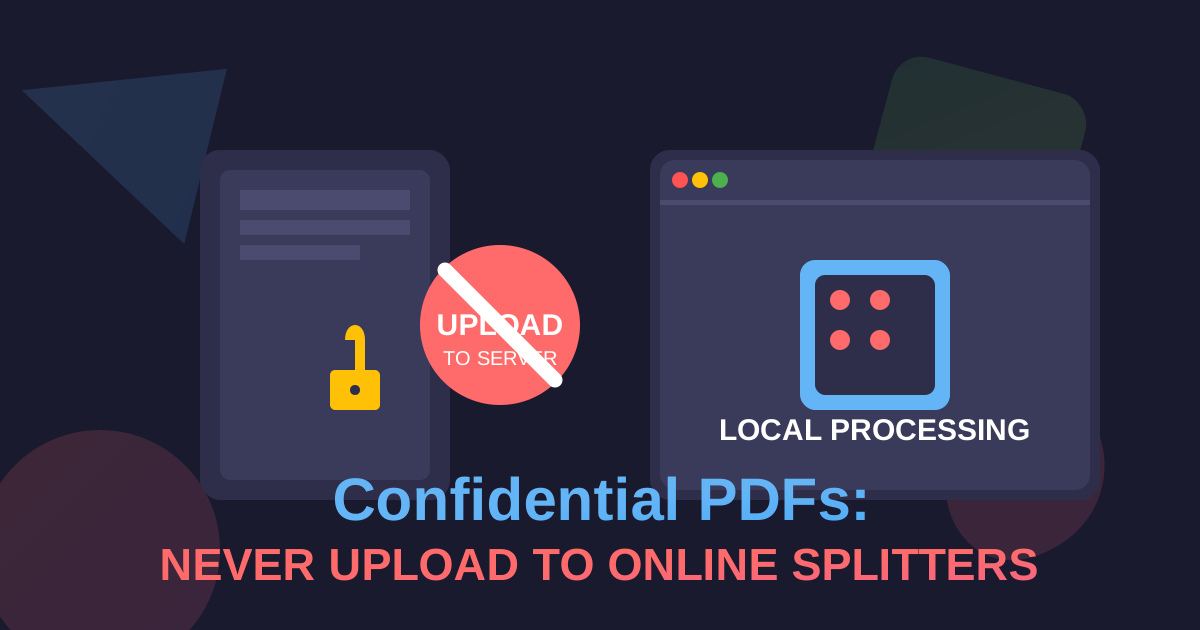
Unlike online splitters that require you to upload your sensitive files to their servers, DumPDF operates entirely within your web browser. Here’s how it ensures 100% privacy and security:
- No Uploads, Ever: When you use DumPDF, your PDF files are never uploaded to a server. All processing – whether you’re splitting, merging, compressing, or using DumPDF’s protect PDF feature – happens purely on your local device, within your browser.
- Zero Data Retention: Since your files never leave your device, there’s no server to store them on, no logs to keep, and absolutely no risk of unintended data retention by a third party.
- Complete Privacy: Your confidential documents remain private, secure, and under your control at all times. There’s no risk of data breaches from a third-party server because your data never reaches one.
- Offline Functionality: Once DumPDF’s web application is loaded in your browser, you can often perform operations even without an active internet connection (depending on the tool), further cementing its offline, secure nature.
- Compliance Friendly: For businesses and professionals, using a client-side tool like DumPDF helps maintain compliance with stringent data protection regulations, as sensitive data never crosses organizational boundaries to unknown servers.
- Comprehensive Toolset: Beyond securely splitting PDFs, DumPDF offers a wide array of tools to manage your documents, from redacting sensitive information to converting formats, all with the same commitment to client-side processing and user privacy.
Conclusion
The allure of free, instant online PDF splitters is strong, but when it comes to confidential documents, the risks are simply too high to ignore. Data privacy violations, cyberattack vulnerabilities, regulatory non-compliance, opaque terms of service, and the potential for malicious tampering are serious threats that can have lasting consequences.
Protect your personal and professional information by choosing tools that prioritize your privacy above all else. Opt for client-side, offline PDF processors like DumPDF, where your files stay on your device, ensuring that your confidential information remains truly confidential. Make the smart, secure choice for your PDF manipulation needs.
Help Keep DumPDF 100% Free & Private
Zero server uploads • No accounts • No trackers