Securely Merge PDFs Offline: Protect Private Data
Published on March 13, 2026
The Critical Need for Secure PDF Merging in a Data-Driven World
In today’s digital landscape, PDF documents are the bedrock of professional and personal communication. From legal contracts and financial reports to medical records and academic papers, we constantly interact with PDFs containing sensitive and private information. The need to combine multiple PDF files into a single, cohesive document is a common task, streamlining workflows and organizing data.
However, convenience often comes with a hidden cost, especially when dealing with private data. While numerous online PDF tools promise quick and easy merging, they often pose significant security risks that most users overlook. The critical question isn’t just how to merge PDFs, but how to merge PDFs safely, ensuring your confidential information remains private and protected.
This comprehensive guide will delve into the inherent dangers of traditional online PDF mergers and introduce you to the superior, privacy-first approach of client-side, offline processing – a method championed by innovative tools like DumPDF – where your files never leave your device.
The Hidden Dangers of Online PDF Tools: Why Your Data Isn’t Safe
Imagine uploading a PDF containing your social security number, bank statements, or patient health information to an unknown server. This is precisely what happens when you use most free online PDF merging services. While these tools offer undeniable convenience, they operate on a fundamental principle that compromises your data security: file upload to a remote server.
Here’s why this model is inherently risky:
1. Data Transmission Vulnerabilities
When you upload a file, it travels across the internet to a third-party server. During this transit, even with SSL/TLS encryption, there’s a theoretical risk of interception, especially if the service’s security protocols aren’t robust.
2. Server-Side Storage and Processing
Once your PDF reaches their server, it’s stored, processed, and then the merged file is sent back to you. This means:
- Temporary Storage: Your private data resides on a third-party server, often for an unspecified period. Even if they claim to delete files quickly, data breaches can happen at any time.
- Access by Third Parties: The service provider, or anyone with unauthorized access to their servers, could potentially view, copy, or misuse your sensitive documents.
- Jurisdictional Issues: The servers might be located in countries with different data protection laws, leaving your data vulnerable to foreign regulations or government access requests.
3. Compliance Nightmares
For professionals and businesses, using unsecured online tools can lead to severe compliance issues. Regulations like GDPR, HIPAA, CCPA, and many others mandate strict data protection measures. Uploading private client or patient data to a third-party server without explicit consent and robust security guarantees is a direct violation, risking hefty fines and reputational damage.
4. Malicious Intent or Incompetence
While many online services are legitimate, some might have lax security practices, or worse, be designed to harvest data. You have no way of knowing how your data is handled once it leaves your control. Understanding how offline manipulation secures PDF structures provides deeper insights into safe data handling.
The Gold Standard: Client-Side, Offline PDF Processing
There’s a revolutionary alternative that completely bypasses these risks: client-side, offline PDF processing. This technology, exemplified by tools like DumPDF, redefines secure PDF manipulation by ensuring your files never leave your device.
What is Client-Side, Offline Processing?
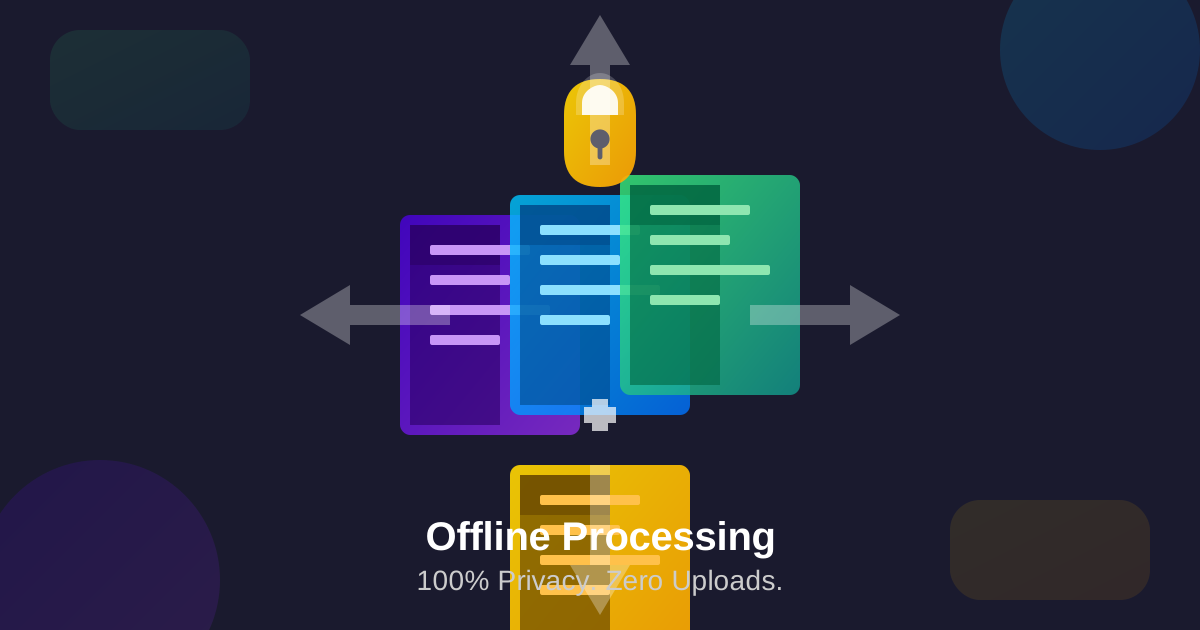
Simply put, “client-side” means that all the heavy lifting – the merging, splitting, compressing, or editing of your PDF – happens directly on your computer, within your web browser. “Offline” refers to the fact that once the tool’s code is loaded, it doesn’t need to send your files back and forth to a server for processing.
How Does This Ensure 100% Privacy and Zero Data Leaks?
The core benefit is elegantly simple:
- No Uploads, Ever: Your PDF files are never uploaded to an external server. They are opened and processed purely within your browser’s memory.
- Local Processing: The merging algorithm executes entirely on your device. The raw data of your PDFs remains confined to your computer.
- No Data Trail: Since nothing is uploaded, there’s no data stored on a third-party server, no logs of your activities, and no possibility of your files being intercepted during transit to or from a server.
- Complete Control: You retain absolute control over your private data from start to finish.
Key Benefits of Choosing Client-Side, Offline PDF Merging Tools
Beyond the paramount benefit of privacy, client-side tools offer a host of other advantages:
1. Absolute Privacy & Confidentiality
Whether you’re combining sensitive legal documents, personal financial statements, or confidential research, you can proceed with the absolute assurance that your data is not exposed to any external entity.
2. Enhanced Security & Zero Data Leaks
By cutting out server-side interaction, you eliminate the risks of server breaches, unauthorized access, and data harvesting. Your data remains secure within the confines of your device.
3. Regulatory Compliance Simplified
For businesses and professionals, using client-side tools significantly eases the burden of data protection compliance. You can confidently merge documents containing PII (Personally Identifiable Information) or PHI (Protected Health Information) without worrying about third-party data handlers.
4. Reliability and Speed
While an internet connection is needed to initially load the tool’s code, the actual processing is often faster for smaller files because there’s no upload/download latency. The performance depends solely on your device’s capabilities, not server load or network congestion.
5. Accessibility and User Experience
Many client-side tools, like DumPDF, are designed with intuitive drag-and-drop interfaces, making the merging process incredibly straightforward.
Practical Steps for Securely Merging PDFs Offline
- Identify Your Sensitive Documents: Clearly identify which PDFs contain private information.
- Select a Reputable Client-Side Tool: Open your secure browser-based tool (like DumPDF).
- Drag and Drop: Drag your PDF files from your computer directly into the designated area in the browser. Watch closely – there should be no “uploading” progress bar indicating server transfer.
- Arrange and Confirm: Reorder the documents or pages as necessary.
- Initiate Merge: Click “Merge”. The processing will happen almost instantly on your device.
- Download Your Merged File: Save the combined PDF to a secure location on your computer.
Beyond Merging: The Future of Secure PDF Manipulation
The client-side processing model isn’t limited to just merging. The same principles apply to other essential PDF operations:
- Splitting PDFs: Need to break apart a large report? Read how to securely split PDFs offline.
- Compressing PDFs: Reduce file size without sending your data to a server. Learn more about offline PDF compression.
- Converting PDFs: Convert PDFs to other formats securely on your local device.
As data privacy concerns continue to grow, the demand for tools that prioritize user control and data sovereignty will only increase. Client-side, offline PDF processors represent the future of secure document management.
Summary
Merging PDF documents shouldn’t come at the expense of privacy. The traditional model of uploading sensitive files to third-party servers is fraught with risks. By embracing client-side, offline PDF processing tools like DumPDF, you choose absolute data protection. Your files remain on your device, guaranteeing 100% privacy and eliminating data leaks.
Frequently Asked Questions (FAQs)
Is it safe to combine PDF files online?
Using generic online PDF combiners requires you to upload your files to external servers, which is risky for sensitive documents. Server breaches, vaguely-worded privacy policies, and data interception during transit are all potential threats. Always use a 100% offline client-side tool for confidential data.
How can I merge PDFs without internet access?
Once you load a client-side tool like DumPDF in your web browser, its core logic remains in the browser’s memory. You can generally disconnect your Wi-Fi, upload local documents into the browser interface, hit merge, and safely download the combined file all while entirely offline.
Will merging my PDFs locally corrupt the formatting?
No, secure local PDF manipulation libraries parse the underlying object structure of your document directly. They preserve text, fonts, layout, and images flawlessly when stitching the files together.
Help Keep DumPDF 100% Free & Private
Zero server uploads • No accounts • No trackers