How Stock Rating Agencies Protect Pre-Release Data
Published on July 7, 2026
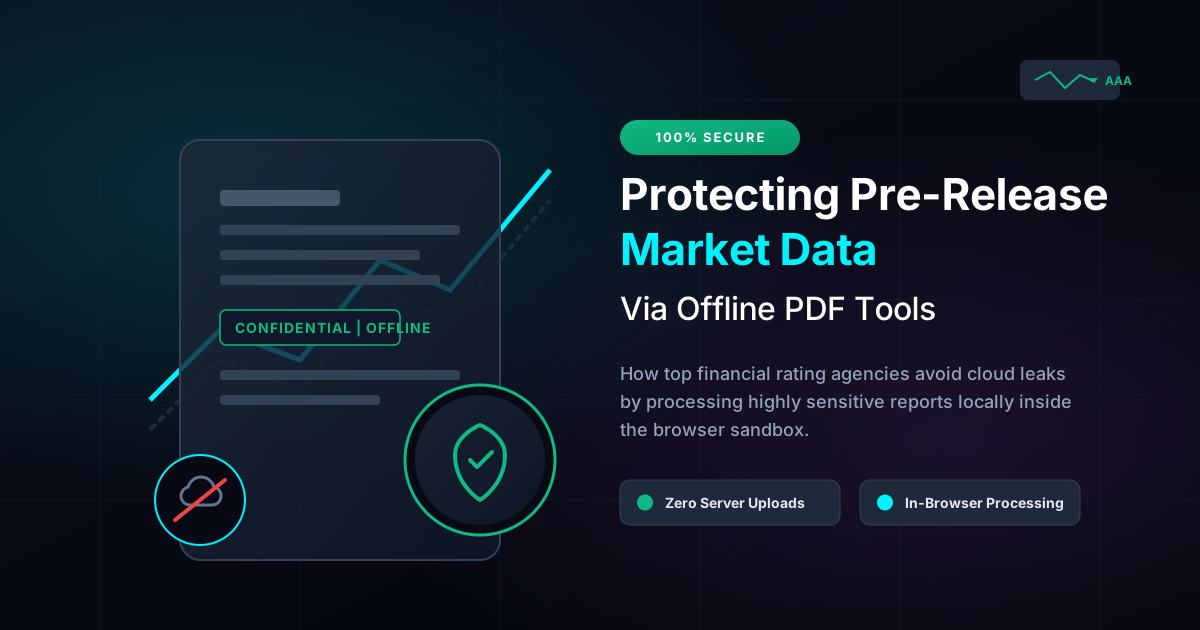
Quick Answer: Stock rating agencies secure sensitive, pre-release market data by using client-side, offline PDF processing tools. By keeping document manipulation entirely within the local web browser, these agencies eliminate the risk of server-side data leaks, ensuring absolute confidentiality and compliance.
In the world of high-finance, information is the ultimate currency. A single-point upgrade or downgrade of a blue-chip stock by a major rating agency like S&P, Moody’s, or Fitch can trigger billions of dollars in market movement within milliseconds. Because of this immense market-moving power, pre-release stock rating reports are among the most highly guarded secrets in the financial sector.
If these reports leak even a minute before their scheduled release, it can lead to insider trading, market manipulation, and devastating reputational damage for the rating agency. To mitigate these risks, financial analysts and compliance officers employ strict security protocols. One of the most effective, yet overlooked, tools in their arsenal is offline, client-side PDF processing.
In this article, we will explore why stock rating agencies avoid cloud-based PDF tools, how offline document processing works, and how you can apply these same enterprise-grade security practices to your everyday workflows using tools like DumPDF.
The Hidden Vulnerability: The Danger of Cloud-Based PDF Editors
Most professionals routinely use online PDF tools to merge, split, or compress documents. However, many are unaware of the journey their files take during this process.
When you use a standard online PDF editor, your document is uploaded to an external cloud server. The server processes the file and then sends the modified PDF back to your browser. While convenient, this workflow introduces several critical vulnerabilities for sensitive financial data:
- Data in Transit: Even with HTTPS encryption, uploading files to a remote server exposes them to potential intercept attacks.
- Server-Side Storage: Many cloud PDF services store cached copies of your uploaded documents on their servers for hours, days, or even permanently. If their database is breached, your sensitive data is exposed.
- Third-Party Access: Free online PDF tools often fund their operations by analyzing uploaded document metadata or sharing data with third-party processors.
For a stock rating agency dealing with pre-release market data, uploading a report to an external server is an unacceptable compliance violation. This is why financial institutions mandate local, offline-only document workflows.
What is Client-Side, Offline PDF Processing?
Fortunately, modern web technology has evolved. It is no longer necessary to upload files to a server to manipulate them. With advanced client-side processing (using technologies like WebAssembly and local JavaScript), all PDF modifications can occur directly inside your web browser.
When you use a privacy-first platform like DumPDF, your files never leave your computer. The browser acts as a self-contained, offline sandbox. Whether you are merging files, extracting pages, or compressing a report, the entire operation is executed locally by your computer’s processor.
If you disconnect your internet entirely, the tools will still work perfectly. This architecture guarantees 100% privacy, making it impossible for data leaks, server breaches, or unauthorized third-party access to occur.
How Rating Agencies Secure Their PDF Workflows (Step-by-Step)
Stock rating agencies follow rigorous workflows to prepare and finalize their reports before publication. Here is how they utilize offline PDF tools to maintain absolute confidentiality at every stage.
1. Removing Sensitive Draft Metrics and Footnotes
Before a report is finalized, analysts often share drafts with internal committees. These drafts contain raw data, internal calculations, and sensitive notes that must not be included in the final public release.
To clean these documents without risking exposure, compliance officers redact PDF files locally. By using offline redaction, they permanently remove the sensitive underlying metadata and text layers directly in their browser, ensuring that no hidden data can be extracted by tech-savvy readers.
2. Organizing Scanned Research Material Offline
Financial analysts often compile physical documents, printed balance sheets, and handwritten notes from corporate audits. These documents are scanned into digital formats, which frequently results in upside-down pages or disorganized files.
To prepare these supporting documents for internal review, analysts must organize them efficiently. They rotate and organize scanned PDF pages offline to ensure the dossier is perfectly aligned and readable. Doing this offline prevents these raw, unredacted corporate scans from ever touching a public network.
3. Restricting Access with Local Encryption
Once a rating report is finalized, it must be locked down until the exact second of its public release. To prevent unauthorized internal viewing or accidental leaks, agencies must protect your PDF documents with strong, enterprise-grade encryption.
By applying passwords and restricting permissions (such as disabling printing or copying) locally, the agency ensures that the decryption key and the unencrypted document are never transmitted over the internet during the setup process.
Why DumPDF is the Trusted Choice for Secure Workflows
You do not need a multi-million dollar cybersecurity budget to protect your documents like a major stock rating agency. DumPDF brings enterprise-grade, client-side security to everyday users and business professionals.
Here is why DumPDF stands out as a premier security-focused PDF utility:
- Zero Server Uploads: Your files are processed entirely in your browser. DumPDF does not have servers that store your documents, meaning there is zero risk of a database leak.
- 100% Offline Capability: You can load the DumPDF website, turn off your Wi-Fi, and perform all your PDF tasks completely offline.
- No Registration Required: You do not need to create an account, provide an email address, or input personal details to use the tools, preserving your digital anonymity.
- Lightning-Fast Performance: Because your files do not have to travel back and forth over the internet, processing is nearly instantaneous, limited only by your computer’s hardware.
Conclusion: Elevate Your Document Security Today
In an era of rising cyber threats and stringent data privacy laws (like GDPR and CCPA), relying on traditional cloud-based PDF tools is a gamble. Stock rating agencies have proven that the safest way to handle sensitive data is to keep it local.
Whether you are managing highly confidential financial reports, legal contracts, medical records, or personal tax documents, you deserve the peace of mind that comes with complete privacy. Switch to a client-side workflow today and experience fast, secure, and completely offline PDF manipulation with DumPDF.
Help Keep DumPDF 100% Free & Private
Zero server uploads • No accounts • No trackers