How Rating Agencies Secure Pre-Release Data with Offline PDFs
Published on June 30, 2026
Quick Answer: Stock rating agencies protect sensitive pre-release market data by utilizing client-side, offline PDF processing. This ensures that highly confidential financial reports are processed entirely within the local browser and are never uploaded to external servers where they could be intercepted, leaked, or scraped.
In the high-stakes world of global finance, information is the ultimate currency. A single pre-release credit rating adjustment, market analysis report, or corporate earnings projection from an agency like S&P, Moody’s, or Fitch can trigger billions of dollars in market movement within milliseconds.
Because of this immense influence, stock rating agencies are prime targets for corporate espionage, state-sponsored cyberattacks, and opportunistic insider trading. To combat these threats, these institutions must enforce ironclad document security protocols.
One of the most critical, yet frequently overlooked, links in this security chain is how draft documents are edited, compiled, and formatted. To prevent catastrophic leaks, elite financial institutions are moving away from cloud-based document editors in favor of client-side, offline PDF processing.
The Invisible Threat: Why Cloud PDF Tools are a Security Nightmare
For the average user, uploading a document to a free online PDF editor seems harmless. However, for a financial analyst handling market-moving intelligence, this action is a massive security violation.
When you use a traditional cloud-based PDF tool, your document is uploaded to an external server. Even if the service provider promises to delete your files within 24 hours, several critical vulnerabilities remain:
- Server-Side Data Caching: Files are temporarily stored on third-party servers, creating a window of vulnerability for hackers targeting those specific cloud environments.
- Data Transit Vulnerabilities: Even with HTTPS, data in transit can theoretically be intercepted or misrouted due to misconfigured network protocols or DNS hijacking.
- Insider Threats: Employees or contractors working for the cloud service provider may have direct or indirect access to the underlying storage buckets where your PDFs are processed.
- AI Training and Scraping: Many free cloud tools include clauses in their Terms of Service allowing them to analyze, scrape, or use uploaded documents to train machine learning models.
For a stock rating agency, a leak of a sovereign credit rating or a major corporate downgrade prior to the official embargo lift could result in regulatory fines, lawsuits, and a devastating loss of market credibility.
What is Client-Side, Offline PDF Processing?
To eliminate these risks, modern security architectures rely on client-side processing.
Unlike traditional cloud tools, a client-side tool uses your web browser as a self-contained execution environment. Technologies like WebAssembly (Wasm) and modern JavaScript allow complex PDF manipulation engines to run directly on your computer’s local processor.
When you use an offline-first tool like DumPDF:
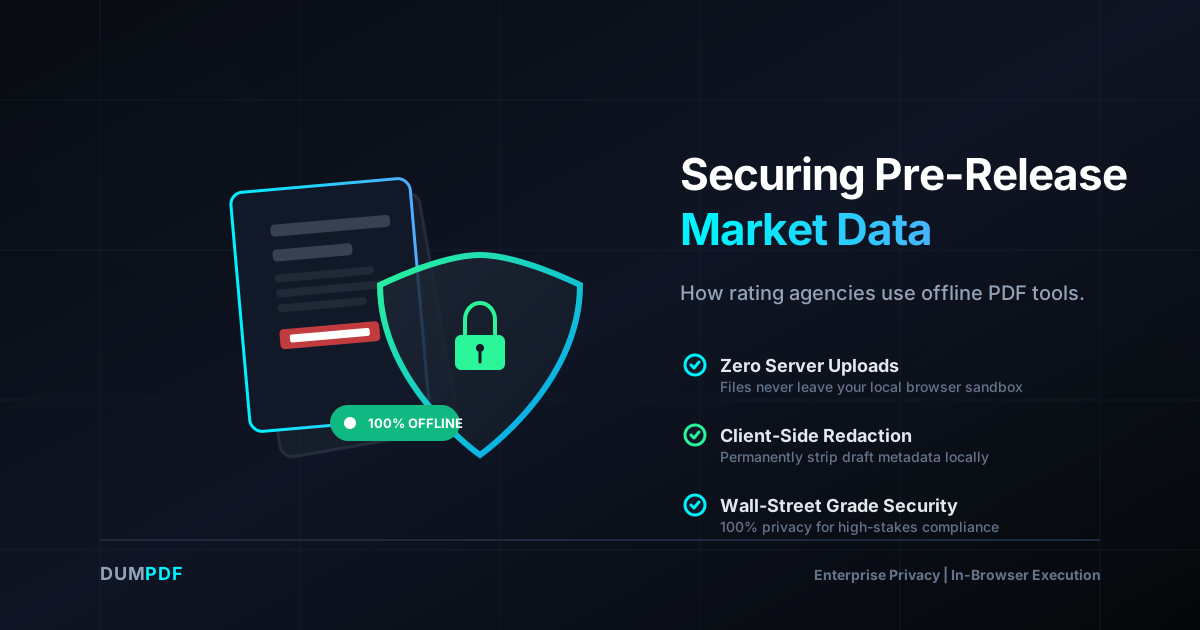
- Zero Server Uploads: Your files never leave your local machine.
- 100% Privacy: The processing happens purely in-browser.
- Offline Functionality: You can literally disconnect your internet router, load the tool, and it will continue to work flawlessly.
This approach combines the convenience of a web-based interface with the absolute security of local desktop software.
How Rating Agencies Secure Pre-Release PDFs
Financial analysts and compliance officers at rating agencies use offline PDF tools to perform several critical operations safely before a report is cleared for public release.
1. Removing Sensitive Draft Elements with Local Redaction
During the drafting phase, reports often contain internal comments, names of lead analysts, raw data sources, and proprietary valuation models that must not be included in the final public release.
Before publishing, compliance teams must redact PDF metadata, hidden text layers, and visible sensitive text. By performing this redaction locally, agencies ensure that the unredacted draft never touches the open web.
2. Standardizing and Compiling Multi-Source Reports
Rating reports are rarely written by a single individual. They are compilations of macroeconomic data, industry analysis, and corporate governance reviews.
Analysts often need to merge chapters, reorder pages, or split master documents into targeted regional reports. Doing this offline prevents unauthorized eyes from seeing how the disparate pieces of a highly sensitive rating action fit together before the final release.
3. Securing Final Deliverables with Local Encryption
Before a PDF is distributed to a restricted list of stakeholders under strict embargo, it must be encrypted.
Using offline tools, agencies can protect PDF documents by applying strong AES encryption and setting user permissions (disallowing printing, copying, or editing) directly in the local browser. Because the password generation and encryption processes occur entirely on the client side, the decryption keys are never exposed to an external server.
The Technical Framework Behind Offline PDF Tools
How is it possible to edit, merge, and protect complex PDF files without a powerful cloud server doing the heavy lifting?
The answer lies in WebAssembly (Wasm). WebAssembly is a binary instruction format that allows code written in low-level languages like C, C++, or Rust to run at near-native speed directly inside web browsers.
[ Your PDF File ] ──> [ Browser Sandbox (Wasm Engine) ] ──> [ Processed PDF File ]
                               ▲
                      (No Data Sent to Internet)
When you open an offline PDF tool:
- The browser downloads a lightweight, highly optimized Wasm package once.
- When you select a PDF, the browser loads the file directly into its local sandbox memory.
- The Wasm engine manipulates the PDF bytes locally on your CPU.
- The browser prompts you to save the newly generated file directly to your hard drive.
At no point in this cycle is a single byte of your document sent over the internet.
Why Everyday Users Need Wall-Street-Grade Security
While you might not be managing multi-billion-dollar sovereign debt ratings, your personal data is just as valuable to cybercriminals.
Every day, individuals upload highly sensitive documents to unverified cloud PDF tools, including:
- Tax Returns and W-2 Forms (containing Social Security Numbers and income data)
- Medical Records and Insurance Claims
- Legal Contracts and Lease Agreements
- Bank Statements and Credit Reports
If a hacker breaches the servers of a popular free online PDF utility, your identity could be stolen in minutes. By adopting the same offline-first philosophy used by financial rating agencies, you can perform everyday tasks—like merging files, signing contracts, or compressing large documents—with the peace of mind that your private information remains 100% private.
Conclusion: Take Control of Your Document Security
In an era of relentless data breaches and aggressive corporate data harvesting, the safest server is no server at all.
By shifting your document workflows to client-side, offline PDF processing, you eliminate the risks of data transit leaks, server-side hacks, and unauthorized third-party access. Whether you are a financial analyst protecting market-sensitive data or an individual safeguarding your personal identity, choosing secure, in-browser tools like DumPDF ensures that your confidential documents remain exactly where they belong: in your hands.
Help Keep DumPDF 100% Free & Private
Zero server uploads • No accounts • No trackers