Secure Patient Records: Offline PDF Workflows for Therapists
Published on May 18, 2026
Quick Answer: Offline PDF workflows ensure patient confidentiality by processing sensitive documents entirely within your browser, meaning files are never uploaded to a remote server, effectively eliminating the risk of data breaches or unauthorized access.
In the modern mental health landscape, the transition from paper files to digital records is nearly universal. While this shift offers immense convenience, it introduces a significant challenge: maintaining the absolute sanctity of patient confidentiality. For therapists, counselors, and psychologists, a data leak isn’t just a technical glitch—it is a profound breach of trust and a potential legal catastrophe.
As PDF remains the industry standard for intake forms, clinical notes, and insurance billing, the tools you use to manipulate these files matter. Most popular online PDF editors function by uploading your documents to their servers, processing them, and then letting you download the result. In this article, we explore why this “upload-and-process” model is a risk and how offline, client-side PDF workflows are the only way to guarantee 100% privacy.
The Hidden Risks of Cloud-Based PDF Tools
When you use a standard “free” online PDF tool to merge a patient’s history or split a clinical assessment, your file travels across the internet to a third-party server. Even if the service claims to delete files after an hour, several risks remain:
- Server Vulnerabilities: No server is 100% unhackable. If a server is compromised while your patient’s sensitive data is sitting in its “temporary” folder, that data is exposed.
- Data Interception: Data in transit is susceptible to “man-in-the-middle” attacks, especially if you are working from a public or semi-private Wi-Fi network.
- Logs and Metadata: Many cloud services retain metadata or logs of the files processed, which could still contain identifying information.
For healthcare professionals, these risks are often incompatible with HIPAA (Health Insurance Portability and Accountability Act) and other global data protection standards like GDPR.
The Solution: Client-Side, Offline Processing
The gold standard for digital privacy is client-side processing. This technology allows your web browser to perform complex PDF manipulations (like merging, splitting, or encrypting) using your computer’s own hardware.
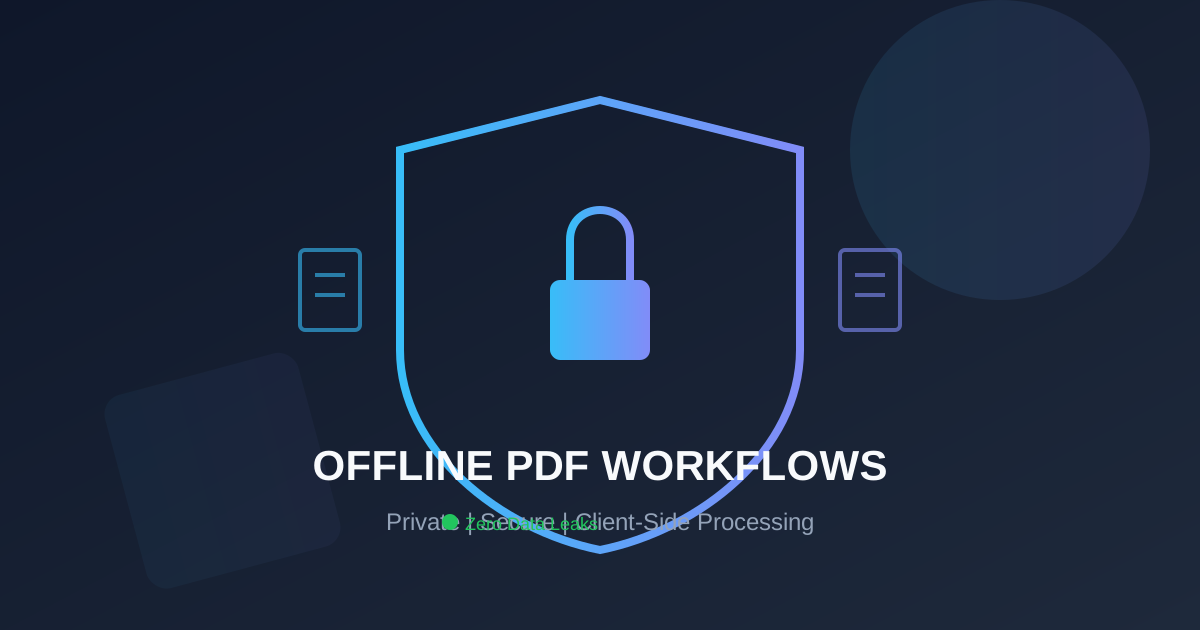
When you use a tool like DumPDF, the file never leaves your device. The “upload” button is essentially a “load into memory” button. Because the processing happens locally, you could literally turn off your internet connection after the page loads and the tool would still work perfectly. This “Zero-Server” approach ensures that no one—not even the developers of the tool—can see your patient’s data.
Essential PDF Workflows for Mental Health Professionals
To maintain an ethical and secure practice, therapists should integrate specific PDF habits into their daily routine.
1. Anonymizing Data for Supervision or Research
Therapists often need to share case studies for peer supervision or academic purposes. In these instances, removing PII (Personally Identifiable Information) is mandatory. Instead of just drawing black boxes in a standard editor (which can sometimes be removed), you should redact PDF files using tools that permanently scrub the underlying data. Doing this offline ensures that the “un-redacted” version never exists on a cloud server.
2. Securing Records with High-Level Encryption
Clinical notes should never be stored as “open” PDFs. If your computer or cloud storage (like Google Drive or Dropbox) is ever accessed by an unauthorized party, those files are vulnerable. Before saving any document containing clinical insights, you should protect PDF documents with a strong, unique password. Using a client-side tool to add this encryption ensures the password and the unencrypted file stay strictly on your machine during the process.
3. Consolidating Intake Paperwork
A typical new patient generates multiple documents: consent forms, insurance cards, and initial assessments. Merging these into a single, organized PDF makes management easier. Offline merging allows you to combine these sensitive documents without the fear of a “combined” file—containing a full patient profile—sitting on a third-party server.
Why “Offline-in-Browser” is Better Than Desktop Software
You might wonder, “Why not just use a heavy desktop application like Adobe Acrobat?” While desktop software is secure, it often comes with:
- High Costs: Monthly subscriptions can be expensive for independent practitioners.
- Complexity: Many desktop tools are bloated with features you don’t need.
- Update Risks: Outdated software can have security holes.
The “Offline-in-Browser” model provides the best of both worlds. You get the simplicity of a web interface with the security of a local desktop app. There is no installation required, and because the code runs in the browser’s sandbox, it is inherently more secure against system-level malware.
Best Practices for Maintaining a “Zero-Leak” Workflow
To maximize the benefits of offline PDF tools, follow these three simple rules:
- Clear Your Browser Cache: While the files aren’t uploaded, browsers sometimes store temporary data. Clearing your cache regularly is a good hygiene practice.
- Verify the “Offline” Capability: Test your tools. Open the website, turn off your Wi-Fi, and try to process a file. If it works, you know it’s truly client-side.
- Use Strong Passwords: When protecting PDFs, avoid simple passwords like “Patient123.” Use a password manager to generate and store complex keys.
Conclusion: Trust is the Foundation of Therapy
The therapeutic relationship is built on the promise of a safe space. In the digital age, that “space” extends to the files and folders on your computer. By choosing offline PDF workflows, you aren’t just being tech-savvy; you are actively protecting the vulnerability of those who come to you for help.
Tools like DumPDF are designed with this specific philosophy in mind: privacy shouldn’t be a premium feature, and your data belongs to you and your patient—period. By moving your PDF tasks to a client-side environment, you eliminate the middleman and ensure that confidentiality remains uncompromised.
Help Keep DumPDF 100% Free & Private
Zero server uploads • No accounts • No trackers